Tuesday, June 1, 2010

Why did I cry in IFJ congress, Cadiz May 2010?


Why did I cry in IFJ congress, Cadiz May 2010?

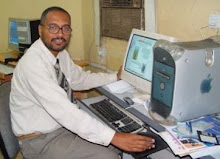
Mekki Elmograbi
mekkielmograbi.blogspot.com

All these delegations are my friends and colleagues? A number exceeds two hundred if you count reporters and free lance!
Trade unionists from big and small countries, rich and poor, cold and hot, Americans, Asians, Africans, Australians and Europeans, all of them speaking different languages, but all of them speaking one concern, all of them have to solve the problems of my career (Journalism). But what their share in the plight of my country, Sudan?
We are obliged as Sudanese journalists to defend the right of Southern Sudanese people in 2011 Referendum; they have the right to choose unity or separation. At the same time we are obliged to support attractive and fair unity. The Sudanese Constitution after CPA stated the two tasks very clearly leaving us to face the challenge of being balanced, professional and ethical in our work, but time is running, we have just six months!
Although the world media must be supportive and positive to all human issues it seems that they just want to divide Sudan. Moreover some of them want to base the referendum on ethnic and religious issues. These trials is going to cause many problems for Sudan even after referendum. Not just for Sudan but for many African war torn regions in many countries. The plight of Sudan is just a model for many counties. Now we there are ongoing six wars based on ethnic or religious issues, many other wars in (silent profile) but they are active and ready. That means more divisions, more refugees, more and continuous human crisis in Africa.
It is not just the matter of unity or separation. It the matter of how to free the Sudanese and African will to deal with problems in democratic and safe atmosphere, the atmosphere that can lead to peaceful unity or peaceful separation. Not to give innocent people the right of division after stirring hate and anger among them.
The media role now is not just to reflect the reality; we do know that media share in shaping the reality. To be ethical in the Sudanese case, media must let the choice of unity to grow or at least to not let the ethnic and religious division to happen.

Thursday, April 22, 2010

Sudanese Share in Earth Day

By the Writer Mekki Elmograbi
Press Freedom & Human Rights Secretary SJU Sudanese Journalists Union
An Environmental Prayer!
…………………………………………….
Imagine that Muslims and Christians pray together in one place. The only and prior issue that can unite their prayers is future of their planet (the Earth)
The only prayer that Muslims can share Non-Muslims in Islamic Fiqh (Jurisprudence) is Istisqa; the Prayer of asking God for rains. It has another similar shape; Istisha which is the prayer for sunny day and calm weather!
The common factor in these two prayers is the weather, asking God for good weather. If there is lack for water or there is a plenty of water and fears of floods.
I wrote an essay about this prayer in a Sudanese Arabic daily during the first Islamic Christian Dialogue in Sudan, sponsored by the Ministry of Guidance in Sudan, but I think I can make good summary for Earth Day 22 April 2010.
From: Fiqh-us-Sunnah, Volume 2 (The most famous Islamic book in Jurisprudence)
(It is also preferred, upon seeing the rain, to say: "O God, make it a beneficial rain" and he should – the Imam- uncover part of his body to the rain. On the other hand, if one fears that there is too much rain, one should say: "O God give us mercy and do not give us punishment, calamities, destruction or flooding. O God, make it (the rain) upon the woods, farms and trees. Make it around us and not upon us.")
I can call both Istisqa and Istisha prayers, The Environmental Prayer. Both of them have two ways of performance:
The first one, just like regular Muslim prayers with specific actions lined by Islamic Fiqh. In this case Non-Muslims can witness the prayer and share invocations it.
The second one is a free prayer, just invocations from the beginning to the end. In this performance all people (Muslims and Non-Muslims) in the city or the village can go out side the village or they can gather in an open area. It is preferably to bring children, their domestic animals, farm animals with them in cages or tied with ropes, this to show that all creatures are equal in there needs, all face the same destiny. Just as Nuer people in Sudan say: kondial labne gaat cukni “we are all little ants in the sight of God”
All people may pray to God wearing old clothes, in a humble and lowly manner, and an Imam will repeat narrated invocations about human needs like:
O God, give us saving rain which leads to something good and which is productive - a general heavy rain - now and not later.
Or he can read verses like:
Seek forgiveness of your Lord. He is Ever-Forgiving. He will let loose the sky for you in plenteous rain.’ and: ‘Ask forgiveness of your Lord, and turn to Him (in repentance): He will send you the skies pouring abundant rain.
In my column I ask the Minister of Guidance In Sudan to gather his guests in the Green Square in Khartoum and perform a prayer of invocation to protect the Earth from the evils of the Climate Change: floods and draught.
I wish I was there, in Copenhagen to perform these prayers with all nations, all religions!
There is a contribution and a share for religion in our lives, thoughts, communities, and even politics! It is not bad at all to make positive role for religion. In the issues of environment and climate change and global warming, we need to minimize the gap of misunderstanding between North and South, the poor and the rich, therefore we have to use the maximum of our human energies. No doubt, religion is one of our greatest sources of human energy.

Tuesday, April 20, 2010

السيناريوهات الأمريكية لوحدة أو إنفصال السودان - مقالي الأول في سلسلة ستنشر في ذي سيتيزن السودانية

Unity of Sudan in the American Strategy

There are many sources and references that can lead us to good discussions to find out the real American goals and targets related to all Sudanese issues, specially the unity of Sudan.

The base of the discussions is more important than these references, because it helps us to know under which category in American foreign policy the decisions makers will discuss and make their homework for this mission.

Three main categories of strategic plans are highly linked with the topic: Unity of Sudan.

1- American Policy in Africa

2- New Middle East Plan

3- The Campaign against terrorism


Under each category there are dozens of researches and studies and plans, most of them from non-governmental American Centers and think tanks. The process needs to classify all these works, absorb them, make good analysis, and then summarize them.

After this process and according to primary analysis I can say there is no one scenario for the American policy in this matter. There is no list of priority of Scenarios.

There are three active options, each one of them has number of determiners. The relation between the option and the determiners rules the priority of the option among others. These open scenarios are not really open! In each scenario there are conditions for the validity of the scenario. (Validity for the priority).

The scenarios are:

1- Unity of Sudan under Semi-Secular system in North and Extremist Secular in South. (the level of Secularism in North must be changeable and completely manipulated by USA, now there is need for cooperative Islamic regime in the region)

2- Separation: North Sudan is a part of New Middle East, Sudan must engage in the process of normalization (naturalization) in Middle East. (there is need for continuous pressures to make real changes in the regime, these pressures include conflicts)

3- To postpone the problem for other years, under system of Confederation. (The application is the proposal of the Sudanese Union). The other two scenarios will be active for the other period.


I will begin my discussion from the category of (the campaign against terrorism). In this category the homework will be based on:

Muslim World Outreach Strategy (the Department of the State), RAND reports and other sources.

The main source to discuss the African category is APAP reports, (African Policy Advisory Panel).

صحيفة فاينال كول تنقل الآراء المستطلعة : مذكرة أوكامبو أفادت البشير

تحدث الخبر عن تطور كبير بنقل البطاقات الإنتخابية و صناديق الإقتراع بطائرات مروحية إلى مناطق نائية جدا في السودان ليشارك الناس في انتخابات تأتي بعد انقطاع تجربة التعددية الحزبية لكثر من عقدين من الزمان .
و نقلت الصحيفة عن آراء مستطلعة
The International Criminal Court indictment has actually helped the current leader of the Islamic government. The ICC has been a positive for the president. After the indictment the president flew in the face of them and went to about five or six countries around the world.
لقد ساعد قرار المحكمة الجنائية الدولية الرئيس الحالي لهذه الحكومة الإسلامية . المحكمة كان دورها إيجابيا و بصورة حقيقية بالنسبة للرئيس. لقد سافر على مرأى منهم بعد مذكرة القبض خمس أو ست مرات حول العالم

Another topic:

ALBASHER the president of Sudan is very popular.
He deals with Sudanese people easily and openly, before April election he ended a tour all around Sudan.
you can see him singing with a young school girl from Southern Sudan in a festival in North Sudan or Darfur

http://www.youtube.com/watch?v=H0L5LsPZGfM

Tuesday, March 2, 2010

Al-Fatiha upon your souls!

"Al-Fatiha upon your souls", is an Islamic expression usualy said in the situation of condolence, if you want to share the sorrow and with the relatives of the deceased person you have to say this phrase. "Al-Fatiha" is a seven verses Sura in the beginning of the Holy Quran! The literal meaning of Al-Fatiha means the fresh start or the opening stage! But the root of the word in Arabic is the adjective "open" or "not closed"!
The very new usage for this word now you will find it in this article.

Before three years I received a letter from a strange organization, its name Al-Fatiha. The letter was an invitation for me to attend a conference of gays and lesbians in the Islamic world, but the strangest thing was the title of the sender! He was not the representative of the organization, but a Mediator (as he said) and he can prepare all things; the ticket, the visa to New York and the allowance and it would be a generous one. In addition for all that, he or she or (he-she) asked me "if you want to keep your participation secretly you have the right to do so!
He/She said that he/she took my e-mail from a list of free African writers! I do not know anything about this list. I thought at that time it was just a joke of one of my friends!

In the said document:
(Al-Fatiha: Mission Statement:
The Al-Fatiha Foundation is an international organization dedicated to Muslims who are lesbian, gay, bisexual, and trasngendered, those questioning their sexual orientation or gender identity, and their friends. Al-Fatiha's goal is to provide a safe space and a forum for LGBTQ Muslims to address issues of common concern, share individual experiences, and institutional resources. The Al-Fatiha Foundation aims to support LGBTQ Muslims in reconciling their sexual orientation or gender identity with Islam. Al-Fatiha promotes the Islamic notions of social justice, peace, and tolerance through its work, to bring all closer to a world that is free from injustice, prejudice, and discrimination.
Goals and Objectives
Support Muslims who self-identify as lesbian, gay, bisexual, transgender, and those who are questioning their sexual orientation or gender identity.
Provide a supportive and understanding environment for LGBTQ Muslims who are trying to reconcile their sexuality or gender identity with Islam.
Empower LGBTQ Muslims by creating safe spaces to share individual experiences, advocating on their behalf in national and international forums, and providing information about institutional resources.
Foster spirituality among LGBTQ Muslims.
Encourage dialogue with the larger Muslim community around issues of sexuality and gender)

My comment:
After that I realized that it was not a joke. It is a real organization, with many hidden branches in a number of Muslim countries and Muslim communities in non-Muslim countries. It has its website and premises. I traced it in the internet and I found many news and articles supporting it. One of the press releases said: (Participants- in the second conferences- came from the UK, USA, Belgium, …….. (five countries), they represented more that a dozen nationalities and ethnic backgrounds, including: Arab, Pakistani, …….. and Sudanese)
(and Sudanese!) very strange!
Other article said that many of the membership are Imams and Preachers! It is not a matter to practice homosexuality but the matter is your stance in this issue!
I have nothing to say for them. What kind of relationship they want to establish between religion and immorality? Can preachers speak to people and preach them to practice homosexuality? I can just say, as in our traditions Al-Fatiha upon your souls!

The Real Nuer in Sudan!

My essay is just a review for selected paragraphs from a Sudanese book. It is written by Reverend Gabriel Gai Riam Weituor and discusses mainly the relationship between church and state in Sudan. It shows just six pages about the concept of peace in South Sudan with a good example “Covenant Theology of the Nuer”. The writer comes from the Nuer people, and it is from the perspective of the Nuer tradition he wrote this part of chapter nine.
In this chapter he also discusses the concepts of the Prophet Ngundeng. It is another amazing story that we will cover tomorrow.
It is very clear that there are many similarities between Monotheist religions and Nuer religion. The concept of the religious man is not like the African magician, traditional Sudanese Kojour. He is not just an extra-ordinary man who can make miracles, he is not rain maker, but he is a person who can lead his community and neighboring communities to peace and welfare.
We miss here (as usual) the role of African media. The meaning of cultural diversity exists only in dancing and singing. But big naught about our rich culture.
Christian - Muslim Relations In Sudan
A study of the relationship between church and state (1898-2005)
Author: Gabriel Gai Riam Weituor

Chapter Nine

( ….. The Nuer language has two words for “people”. Cuk, (singular cok) means people in the inclusive, universal sense of all the ethnic groups of humankind; it is used in this inclusive sense in contrast to the word naath that denotes people in particular sense of the Nuer themselves.)

(The Nuer phrase, kondial labne gaat cukni “we are all little ants in the sight of God” explains that the Nuer see ants as helpless, and is the same way the Nuer believe God sees the whole humanity in their diversity without distinction. Another Nuer states that human beings are “foolish in the sight of God” (door wang kuoth)……)

( Nuer religion expresses the relationship between God and the people through the concept of “covenant” (Nguot/Ngut), that denotes an inviolable bond both between the Creator and all creation, and between all people.)

(…….It is particular in the sense that they believe that God sends prophets to all peoples; it is universal because the Nuer accept that all these prophets are genuine messengers from God)

( The role of the prophets is to make clear to the people what Nguot, or covenant, requers ofthem in terms of their moral lives. As well as covenant, Nguot means rules and regulations (laws) that the Nuer apply across all aspects of their lives, as communities and individuals. For example the Nuer customary laws are referred to as Nguot Fangak (a district where the Nuer revise their traditional systems)……..)

(…. This is evident in the importance of the late 19th century Prophet Ngundeng who stands in the Nuer tradition as the great prophet of peace and reconciliation. Before Prophet Ngundeng the Nuer prophets and priests were mainly concerned with the welfare of the Nuer community in particular. Some of the prophets carried out raids on other people that had caused instability with their neighbors. However, when Ngundeng came he instituted principles of compensation that were intended to reduce conflicts and create harmony among the people. For example he forbade young men to carry spears to dances, and urged the Nuer to stop raiding their neighbors, thus reducing instability.
Secondly, he involved representatives of the Nuer and their neighboring tribes in the building of pyramid-shaped mound as a symbol of peace building. The shrines of the spirits and divinities of all tribes were brought to the Mound, as a sign of curtailing the escalation of the conflicts among the Nuer and their Neighboring people)

(…. The Dinka, Annuak and other peoples came to the Mound, and by adhering to Ngundeng’s teaching, they combined faithfulness to their own particular traditions with acceptance of the universal order)